Thinning hair is one of the most common and frustrating concerns for women in their mid-30s and beyond. Whether it appears as a widening part, reduced volume, or more hair in the brush, the change can feel sudden and hard to reverse. Many women try topical treatments, supplements or changes in haircare with limited success, then wonder whether clinic-based options such as PRP (platelet-rich plasma) are genuinely effective or simply oversold.
This article looks at what the evidence actually shows for PRP in women, particularly those over 35 with female pattern hair loss, and sets out a realistic timeline and expectations.
What Is Female Pattern Hair Loss and Why Does It Matter After 35?
Female pattern hair loss (also called female androgenetic alopecia) is the most common form of progressive hair thinning in women. It typically presents as diffuse thinning over the crown and top of the scalp, often with a widening central part, rather than the receding hairline more typical in men.
Hormonal shifts around perimenopause and beyond, genetic predisposition, and the gradual miniaturisation of hair follicles all play a role. By the mid-30s and 40s many women notice the process becoming more visible. Importantly, as long as miniaturised follicles are still present, there is biological potential to improve density and thickness. Once follicles have been lost for a long time and the area is smooth, options become more limited.
How PRP Works for Hair
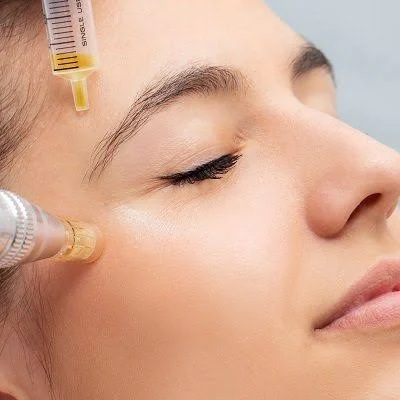
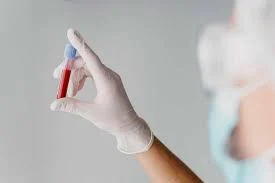
PRP is an autologous treatment. A small sample of your own blood is drawn, processed in a centrifuge to concentrate the platelets, and the resulting platelet-rich plasma is injected into the thinning areas of the scalp.
Platelets contain growth factors that can support follicle activity, improve the local environment around the hair root, and help prolong the growth phase of the hair cycle. The treatment does not create new follicles in completely bald areas and it does not permanently stop the underlying genetic tendency toward thinning. Its role is to support and strengthen existing, weakened follicles.
What Does the Evidence Say for Women?
Multiple clinical studies and systematic reviews have examined PRP specifically in female pattern hair loss. Randomised controlled trials have shown statistically significant improvements in hair density compared with placebo. In one well-known trial, women receiving PRP demonstrated clear increases in mean hair density and calibre at both early and later follow-up points, while the placebo group showed declines. Blinded photographic assessments also favoured PRP.
Broader meta-analyses of studies including female patients report positive effects on hair density. Results are most consistent in early-to-moderate thinning. Women with long-standing, advanced loss where follicles are no longer present see more limited benefit.
PRP is not a miracle cure and protocols vary between clinics, which contributes to some of the mixed commentary online. When performed with an appropriate concentration of platelets and a structured course of treatments, the data support meaningful improvement for many women with suitable candidates.
Realistic Results Timeline
Results are gradual because they depend on the hair growth cycle and the biological response of the follicles.
Weeks 1–6
Reduced shedding is often the first noticeable change. Many women report less hair coming out when washing or brushing. Temporary mild redness, tenderness or scalp tightness can occur after sessions and usually settles quickly. The clinic notes results beginning around the six-week mark, which aligns with the early phase of reduced shedding for many patients.
Months 2–3
Early signs of improved density or finer new growth may start to appear. Hair can feel thicker or look fuller in treated areas.
Months 3–6
This is typically when the more visible improvements in density and thickness become apparent. Most studies assess outcomes in this window after an initial course of treatments.
Beyond 6 months
Gains can continue to consolidate. Because the underlying tendency toward thinning continues, maintenance sessions are usually recommended (commonly every 6–12 months) to help sustain the benefit.
An initial course is typically three to four sessions spaced four to six weeks apart (the clinic lists a range of 1–6 sessions depending on individual needs). A single session is rarely enough for optimal effect.
Who Is a Good Candidate Over 35?
PRP tends to work best when:
- Thinning is early to moderate and follicles are still visible (miniaturised rather than absent)
- The pattern is consistent with female pattern hair loss
- Overall health is good and there are no major contraindications
- Expectations are realistic — improvement in density and reduced shedding rather than complete restoration of youthful volume
It is less suitable as a standalone solution for advanced, long-standing bald areas. In those cases other approaches (including medical therapy or, where appropriate, transplantation) may be more relevant. PRP can sometimes be used alongside other treatments.
Women over 35 are frequently good candidates precisely because this is when progressive thinning often becomes noticeable while many follicles remain viable.
Safety and Practical Considerations
Because PRP uses your own blood, the risk of allergic reaction or transmission of disease is extremely low. Temporary side effects are usually limited to mild redness, tenderness, swelling or headache at the injection sites. Most people return to normal activities the same day.
The treatment itself takes roughly 30–60 minutes. A course requires commitment to the spaced sessions and later maintenance if you want to preserve the gains.
Addressing Common Scepticism
Online discussion of PRP is polarised. Some claim dramatic transformation; others say it does nothing. The clinical picture sits in between. For women with appropriate early-to-moderate thinning, well-delivered PRP can produce measurable increases in density and improvements in hair quality that many find worthwhile. It will not restore a full head of thick hair in advanced loss, and results require an initial course plus maintenance.
Combining PRP with proven topical treatments such as minoxidil is common and may enhance outcomes, as the mechanisms differ.
The Bottom Line for Women Over 35
Yes — PRP can work for thinning hair in women over 35, particularly those with early-to-moderate female pattern hair loss where follicles are still present. Evidence from randomised trials and systematic reviews supports improvements in hair density, and many women notice reduced shedding followed by gradual thickening over three to six months after a proper course of treatment.
It is not permanent without maintenance, it is not effective in completely bald zones, and individual response varies. Honest assessment of the stage of thinning, the presence of viable follicles, and realistic goals remains essential.
If you are noticing progressive thinning and want to understand whether PRP is likely to help in your case, a consultation that includes examination of the scalp and discussion of your pattern of loss is the clearest next step. We can then advise on a suitable protocol and what results are realistically achievable.